
Tell the Governor to direct DSHS: We Cannot Cut Parent to Parent
[Español abajo]

We need your help now. We just received unexpected news that Washington’s statewide Parent to Parent (P2P) program is at risk of losing its contract as soon as 30 days from now after 45 years of successful operation. This program is a vital resource and we cannot lose it, especially now.


If P2P is cut, families of children and adults with intellectual and developmental disabilities in all 39 Washington counties will lose their lifeline of peer support and system navigation. This cut is happening with no public announcement, no legislative vote, and no chance for families to weigh in before it’s gone.


It’s not the legislative session; can they make cuts?

The Governor has directed DSHS to look at all their programs and consider cuts they can make now without legislative directive because the budget outlook for the state is very grim.  Parent to Parent has been targeted for scrutiny.


Why Parent to Parent matters:

  • Peer support from experienced parents (“been there, done that”) provides immediate emotional relief and practical guidance at diagnosis and throughout the life course.
  • P2P helps families navigate complex systems (education, health, social services), preventing crisis and reducing long-term public costs.
  • It’s a high-impact, low-cost program that reaches families statewide — exactly the kind of investment the state should protect.

Last year’s Parent to Parent impact in Washington:

  • 92,858 calls, emails, and connections with families
  • 5,879 contacts provided in languages other than English
  • 1,056 trained parent volunteers; 622 parent support matches facilitated
  • Mailing lists reached 64,536 parents and professionals; 50+ coordinators covering every county
  • 14 dedicated multicultural support programs (including Latino and African American outreach)

This is a cut, even without a headline. Letting a contract lapse produces the same result as a budget cut — but skips the transparency and public process a formal cut would require.


P2P is grounded in state law and has been part of Washington’s core family support infrastructure since 1980. Ending the contract without legislative or public input undermines that statutory commitment.  This especially hurts rural families and families experiencing crisis.


Families are the long-term care support for individuals with developmental disabilities – tell the Governor families need to be supported. 


What to do — Tell the Governor to direct DSHS: “We cannot cut Parent to Parent. We must continue the statewide contract so families can keep vital peer support and navigation services.”

Take Action Now

  • First, click to use our email tool to send a message directly to the Governor and your legislators.
  • You can also call the Legislative Hotline to leave the Governor and your 3 legislators  a message at 1-800-562-6000
  • If you have time, you can also leave a message for Washington State DSHS Secretary Angela Ramirez by calling Constituent Services at (800) 737-0617 or by sending an email to askdshs@dshs.wa.gov.

Cathy, please act now, or we may see P2P services ending before the summer is over.

Thank you for your advocacy, we couldn’t do it without you.

Cathy Murahashi

Public Policy Specialist

Pídale al Gobernador que instruya al DSHS:
¡No podemos recortar a Parent to Parent!


Necesitamos su ayuda ahora. Acabamos de recibir una noticia inesperada: el programa estatal Padre a Padre (Parent to Parent  o P2P) de Washington corre el riesgo de perder su contrato en tan solo 30 días, después de 45 años de operación exitos. Este programa es un recurso vital para las familias y no podemos permitir que desaparezca, especialmente en este momento.


Si se elimina Padre a Padre, las familias de niños, jóvenes y adultos con discapacidades intelectuales y del desarrollo en los 39 condados del estado de Washington perderán una fuente esencial de apoyo entre padres y orientación para navegar los sistemas de servicios. Esta reducción está ocurriendo sin un anuncio público, sin una votación legislativa y sin la oportunidad de que las familias expresen su opinión antes de que el programa desaparezca.


¿No estamos fuera de la sesión legislativa? ¿Aun así pueden hacer recortes?

El Gobernador ha instruido al DSHS (Departamento de Servicios Sociales y de Salud) a revisar todos sus programas y considerar recortes que puedan realizarse sin una directiva legislativa, debido a que las perspectivas presupuestarias del estado son muy preocupantes. Padre a Padre ha sido identificado para revisión y posible eliminación.


¿Por qué es importante el Programa de Padre a Padre (Parent to Parent)?

  • El apoyo entre padres con experiencia (“ya hemos pasado por esto”) brinda alivio emocional inmediato y orientación práctica desde el momento del diagnóstico y a lo largo de todas las etapas de la vida.
  • Padre a Padre ayuda a las familias a navegar sistemas complejos (educación, salud y servicios), previniendo crisis y reduciendo costos públicos a largo plazo.
  • Es un programa de gran impacto y bajo costo que llega a familias en todo el estado, exactamente el tipo de inversión que el estado debería proteger.

Este fue el Impacto del Programa Padre a Padre en Washington durante el último año

  • 92,858 llamadas, correos electrónicos y conexiones con familias.
  • 5,879 apoyos brindados en idiomas distintos al inglés.
  • 1,056 padres voluntarios capacitados; se facilitaron 622 conexiones de apoyo entre padres.
  • Las listas de distribución llegaron a 64,536 padres, familiares y profesionales.
  • Más de 50 coordinadores brindando cobertura en todos los condados del estado.
  • 14 programas multiculturales dedicados al apoyo familiar, incluyendo alcance a las comunidades latinas y afroamericanas.

Esto es un recorte, aunque no aparezca en los titulares. Permitir que un contrato expire produce el mismo resultado que un recorte presupuestario, pero evita la transparencia y el proceso público que requeriría una reducción formal.


Padre a Padre está respaldado por la ley estatal y ha sido parte fundamental de la infraestructura de apoyo para las familias en Washington desde 1980. Terminar el contrato sin participación legislativa ni consulta pública debilita ese compromiso legal. Esto afectará especialmente a las familias rurales y a las familias que están atravesando situaciones de crisis.

Las familias son el principal apoyo a largo plazo para las personas con discapacidades del desarrollo. Dígale al Gobernador que las familias necesitan y merecen apoyo.

Qué hacer:

Pídale al Gobernador que instruya al DSHS: “No podemos eliminar a Padre a Padre (Parent to Parent). Debemos mantener el contrato estatal para que las familias continúen recibiendo servicios vitales de apoyo entre padres y orientación para navegar los sistemas.”

Muchas gracias,

Cathy Murahashi

Public Policy Specialist

Looking Back at Our History: 90 years of The Arc

The first steps that built the Arc of Washington State

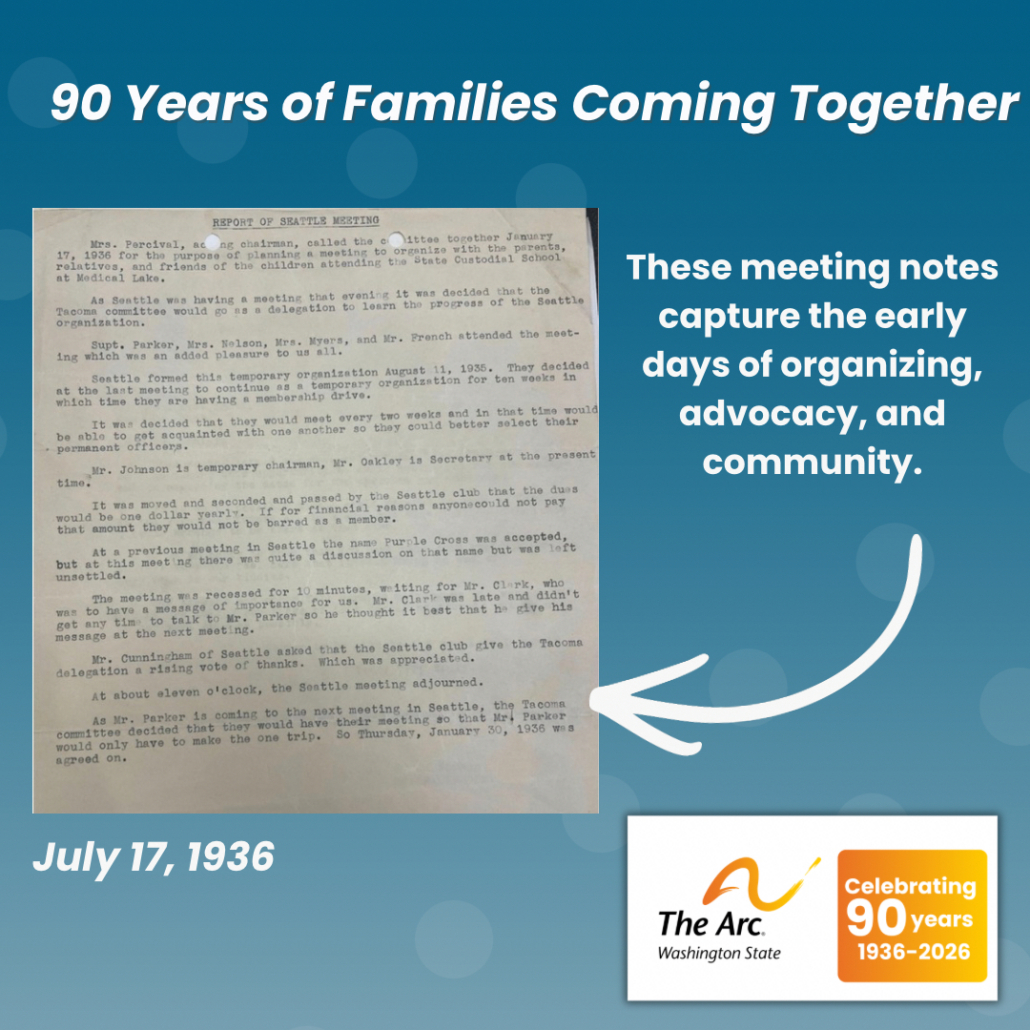
As part of our 90th anniversary, we are sharing some of the historical documents and artifacts that tell the story of how The Arc of Washington State began. These materials were originally collected and curated by former board member, the late Larry Jones, offering a glimpse into the people who came together to build the foundation of an organization that has now served Washington families for 90 years.

The language in these documents reflects the time in which they were written and does not reflect the language we use today. What hasn’t changed is the need for connection, advocacy, and community.

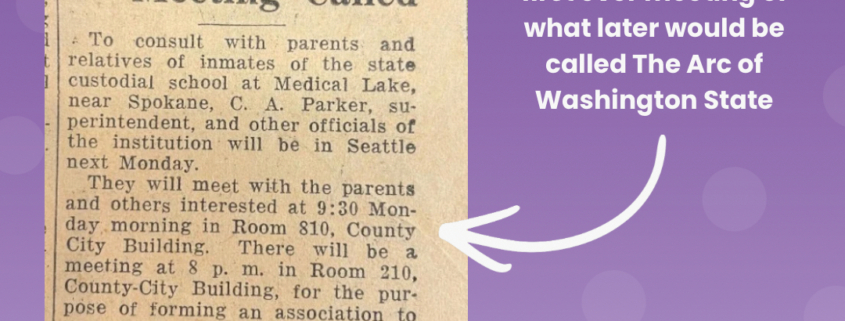
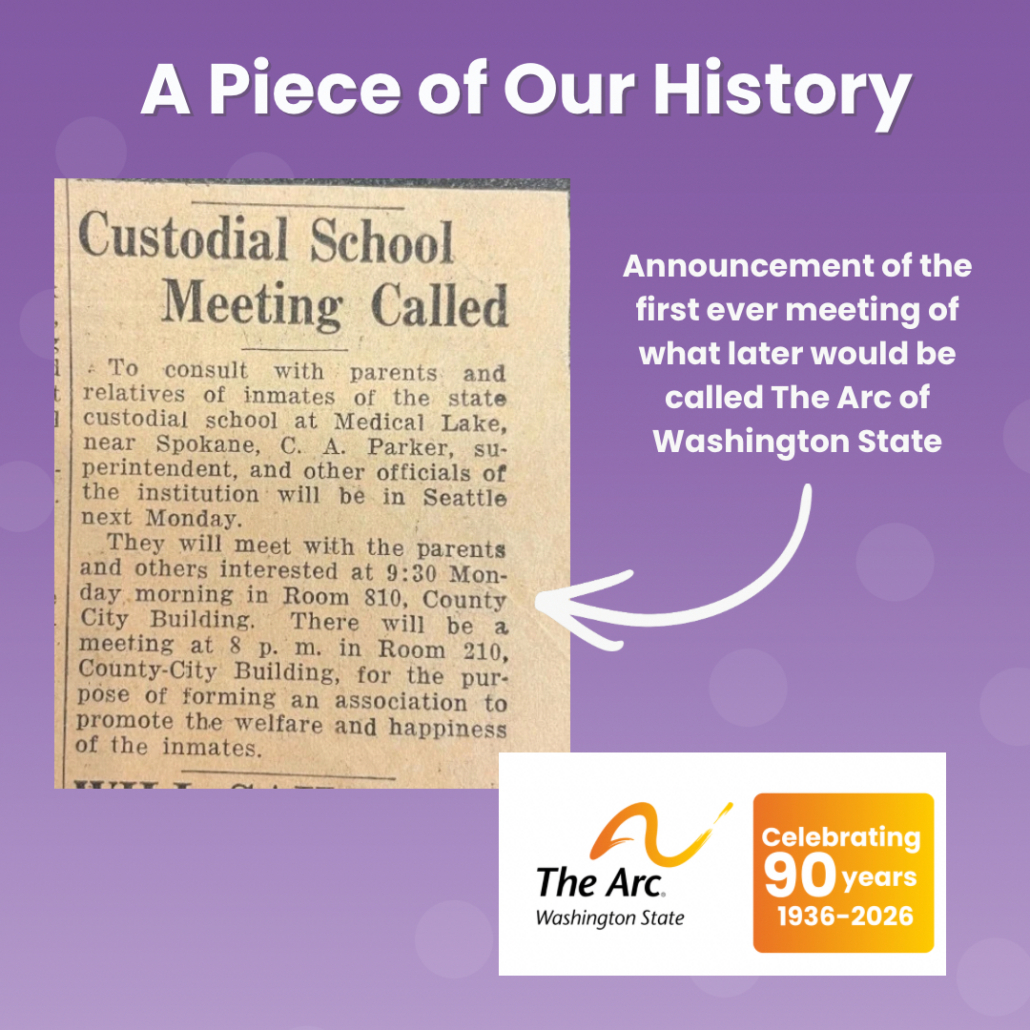
Beginning October 21, 1935, a group of parents gathered in Seattle to discuss forming an organization for families whose children lived at the State Custodial School, now know as Lakeland Village Residential Habilitation Center. This newspaper notice helped spread the word and brought together families who often felt alone in their experiences.

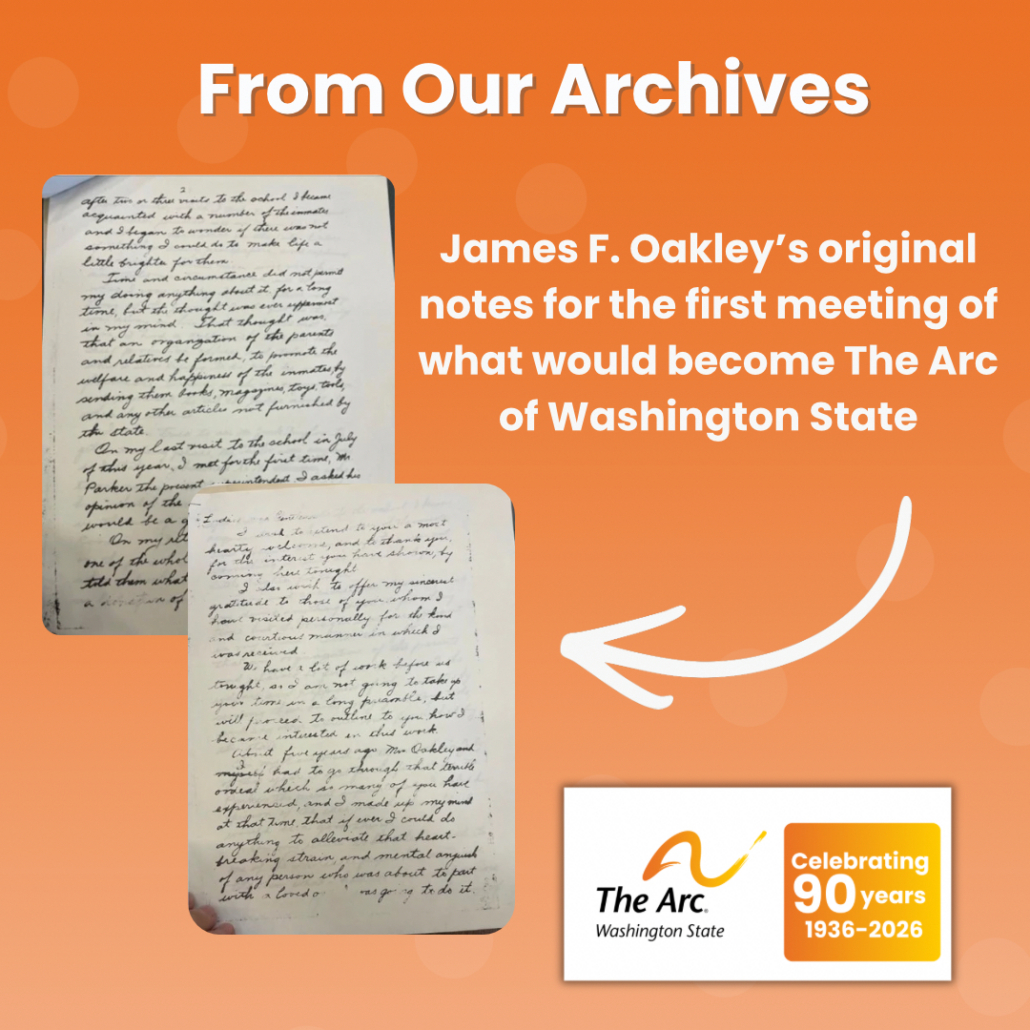
At the first meeting, James F. Oakley shared what inspired him to act after his own family’s experience. He spoke about wanting to help find ways to make life better for individuals living at the institution. His words reflect an idea that still resonates today: families are stronger when they support one another.

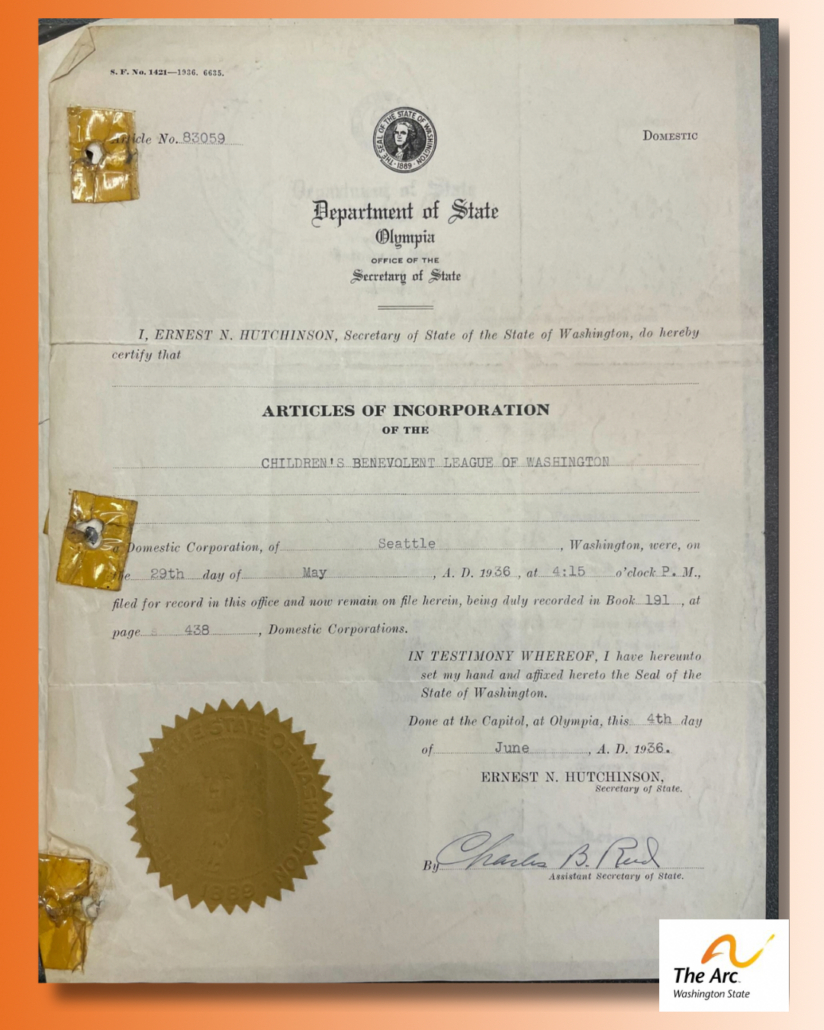
On June 4, 1936, the Children’s Benevolent League of Washington was officially incorporated by the State of Washington. That organization would later become The Arc of Washington State.

In July 1939, another set of meeting notes shows the grassroots work that followed the creation of the organization. Parents came together, made decisions, and built an organization one meeting at a time. These handwritten notes remind us of the lasting changes that often begin with people willing to show up and work together.

Ninety years later, The Arc of Washington State continues that work alongside people with intellectual and developmental disabilities, their families, and communities across the state.

Thank you for joining us in reflecting on these important moments in our history. As we continue to celebrate our 90th anniversary, we are reminded of our commitment to inclusion, advocacy, and belonging.