It’s working – we’ve stopped the worst cuts!

We are in the final two weeks of the 2026 legislative session and I’m writing now with genuinely good news.

We did it.

When this legislative session began, we faced a proposal to change eligibility which would cut off up to 10% of those served by DDCS Medicaid waivers from services – and prevent others from becoming eligible.

Then, out of nowhere, came a second gut punch: a proposal to slash early intervention services for infants and toddlers. These were serious threats to our community, but as of right now, neither one is moving forward. We stopped them.

This happened because of our committed advocates and your persistent advocacy.

Just in the last month, hundreds of advocates showed up. You wrote your legislators and you made it crystal clear that these cuts were unacceptable and harmful.

Even more, a flurry of opinion editorials and news coverage in Tacoma, Seattle, Vancouver, and Spokane made the human cost of these cuts very real, and lawmakers listened. The budget deliberations aren’t over, but let’s take a moment to own this victory.

These wins are never guaranteed. The IDD community is always vulnerable when budgets get tight, and the fact that we beat back two significant cuts in one session is something worth celebrating.

I’m fired up. And we cannot stop now, because here’s the new fight:

The recently released House budget includes a proposal to completely eliminate Speech, Physical and Occupational Therapy services for all adult Medicaid recipients. No alternative. Complete elimination. For people with intellectual and developmental disabilities who depend on these therapies to function, to communicate, to live with dignity — this cannot happen.

We need you to make one call right now.

Pick up the phone, dial 1-800-562-6000, and tell your lawmakers: “No cuts to therapies for Medicaid recipients.” Two minutes is all it takes.

Our team is on the ground in Olympia watching budget conversations and working shoulder-to-shoulder with partners across the state. We are not letting up and I hope you won’t either.

This April, The Arc of Washington celebrates 90 years of advocacy. I’m proud that to be proud of a movement almost a century in the making to continue fighting for people with IDD to live full, meaningful lives in their homes, schools, and communities. That legacy lives in every call you make, every letter you write, every time you show up.

Thank you for being part of this community. We are — without question — stronger together.

In community,

Stacy Dym

Executive Director, The Arc of Washington State

The End is in Sight: Keep the Pressure On

The legislative session is quickly winding down. Bills must be out of the opposite house of origin by Wednesday and out of fiscal committees by March 2. Session adjourns on March 12.

Most of our priority bills are still alive — and that is good news. You can view the status of bills here.

Last Monday’s revenue forecast came in better than expected, giving budget writers some breathing room as they worked to close the gap.

Over the weekend, both the House and Senate released their proposed budgets. We are relieved to report that some of the worst-case scenarios were NOT included:

  • Proposed eligibility changes to waiver and personal care services that would have eliminated services for 2,500 people — nearly 10% of waiver recipients
  • Severe cuts to Early Supports for Infants & Toddlers that would have rolled provider rates back to 2008 levels

This is a direct result of YOUR advocacy.

Legislators told us they heard loud and clear from the disability community that these cuts were unacceptable. Emails, calls, testimony, and meetings made a difference.

Thank you for speaking up.

The Budgets Are Not Pretty

That said, the budgets are still difficult. There is significant red ink and reductions across many areas. Thankfully, most direct services for people with Intellectual and Developmental Disabilities (I/DD) remain intact — but the system itself is taking hits that will affect stability and long-term capacity.

You can compare the House and Senate budgets side by side here.

A Serious Concern: Elimination of Adult Therapies

There is one major provision in the House budget that we did not see coming.

The House proposal eliminates Occupational Therapy (OT), Physical Therapy (PT), and Speech Therapy for ALL adult Medicaid recipients.

The numbers are troubling:

  • Projected savings: ~$8 million in State General Fund dollars
  • Federal match lost: more than $33 million

In other words, the state would lose far more federal funding than it would save.

But the real cost is human.

Therapies Are Not “Extras.” They Are Medically Necessary.

Occupational, Physical, and Speech therapies:

  • Maintain strength, mobility, and independence
  • Help individuals communicate their needs and reduce crisis behaviors
  • Support safe swallowing and prevent aspiration pneumonia
  • Build everyday life skills so people can live, work, and participate in the community

Cutting therapies does not eliminate need.

It simply shifts costs — to emergency rooms, hospitals, institutional settings, and long-term care — at far greater expense.

We do not want Residential Habilitation Centers (RHCs) or nursing facilities to become the only places people can reliably access therapy services. That is a direct blow to community living.

A Forced Choice No One Should Have to Make

While therapies would technically remain available through Medicaid waivers, individuals would be forced to “choose” between therapy services and other essential supports within their limited Individual and Family Services (IFS) or Aggregate budgets — such as:

  • Respite for family caregivers
  • Community engagement
  • Employment supports
  • Behavioral services

This is not real choice. It is rationing.

The good news: this proposal is only in the House budget. There is still time to ensure it does not appear in the final negotiated budget.


What you can Do

If this issue matters to you, please contact your House members and tell them:

Do not eliminate PT, OT, and Speech therapy for adult Medicaid recipients. Therapies are medically necessary and life-changing.

What Happens Next?

The House and Senate must now negotiate a final spending plan. The Governor must also sign off — and there are already differences of opinion about revenue assumptions, including reliance on the proposed “Millionaire Tax” (SB6346). More than 100,000 people signed in on that bill, showing how high-stakes this conversation is.In short: the session is not over. Much could still change. Stay tuned.

Your voice matters. We have already seen that advocacy works.

Let’s keep going.

Thank you for your continued partnership. We cannot do this without you.

Proposed budget cuts could cut 5,000 from services

An article appeared in The Columbian detailing devastating proposed budget cuts that would change eligibility for Waiver services and effectively cut 5,000 people from disability services in Washington State.

Click here to take action now to tell legislators to STOP these changes and REJECT the cuts.

TAKE ACTION NOW

From The Columbian:

“Local advocates, residents and service providers are sounding the alarm over changes to eligibility criteria for Medicaid-funded disability services included in Gov. Bob Ferguson’s proposed 2026 supplemental budget.

The changes would make it more difficult for people with intellectual or developmental disabilities to use a state Medicaid waiver that allows them to access resources from the state’s Developmental Disabilities Community Services. They would have to show a greater level of need to qualify for support, which could make it more difficult for Clark County residents to access the services they need, said Tanya English, community impact and systems manager for Peace NW, a Vancouver nonprofit.

By narrowing the criteria eligibility, up to 5,000 people statewide could lose access to services, according to The Arc of Washington State, an advocacy nonprofit.

Those resources include supported employment, assistive technology, life skills training and skilled nursing.

To qualify for a waiver, a person must demonstrate functional eligibility, meaning they undergo an assessment to evaluate the level and type of care they require.”

Read the whole article at Columbian.com: https://www.columbian.com/news/2026/feb/17/advocates-5000-disabled-people-in-washington-could-lose-access-to-services/

“Jason Rockwood, 40, of Vancouver has been working at Pioneer Feed in Ridgefield for 17 years through Trillium Employment Services, a nonprofit organization that helps integrate people with intellectual and developmental disabilities into the workforce.

Developmental Disabilities Community Services connected him to Trillium, which helped him navigate C-Tran’s paratransit service and provided emotional support to bolster his success in the workplace.

Rockwood said supported employment has allowed him to be independent, see more of the community and have stable income. Losing it would make him feel terrible, he said.”

“Alyeia GeBorde, 25, of Vancouver also receives supported employment with Trillium. A year and a half ago, she landed a job at Trader Joe’s, which she said would not have been possible without the support of her job coach.

Together, they were able to find a job that fit her needs since recovering from surgery for seizures. She said receiving support through Developmental Disabilities Community Services has allowed her to get back on her feet.

Without supported employment, she’d be devastated, she said.”

Click here to take action now to tell legislators to STOP these changes and REJECT the cuts.

TAKE ACTION NOW

Why We Need a Roadmap for the Future

Why Washington Must Invest in Long-Term Planning Now

We are almost halfway through the legislative session, and it has been a flurry of activity—hearings, executive sessions, meetings—it’s all a bit of a blur. Wednesday, February 4, marked the first major cutoff, when bills needed to be passed out of policy committees. The next key deadline was Monday, February 9, when bills must have been out of the fiscal (money) committees in order to stay alive this session.

Over the past few weeks, we’ve been asked whether there is any legislative activity aimed at closing Residential Habilitation Centers (RHCs). The short answer is: no. There are currently no bills this session that would close RHCs.

What is happening is a series of small, bipartisan bills intended to gather information, improve transparency, and preserve historical context—steps that can help inform future decisions. These bills include:

  • SB 5863 – An act relating to the preservation and inspection of state historical records
  • HB 2319– Renaming certain state residential facilities for persons with developmental disabilities takes out the word “school”.
  • HB 2350– Increasing transparency regarding Residential Habilitation Center compliance with specific federal requirements

Last year, one of the primary arguments against closing RHCs was that “there was no plan” for how to transition people and build the necessary community-based supports. That concern is real—and it has been echoed for years.

The Developmental Disabilities Community Services (DDCS) system has produced numerous reports and studies, including  The Rucklehaus Report (2019), which identified significant challenges and outlined thoughtful potential solutions. Unfortunately, many of those recommendations stalled during the pandemic and were never fully implemented.
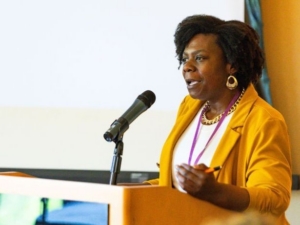
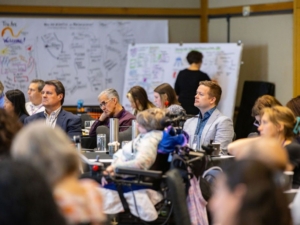
Last summer, The Arc convened dozens of legislators, community members, and disability policy experts at first National Developmental Disabilities Legislative Symposium to review how far we’ve come in Washington state and what is next for investments in community services.

In addition, DDCS has held multiple listening sessions over the past several years, including through the Legislative and Regulatory Community Council (LRCC). These forums consistently highlighted serious gaps in community supports—particularly for individuals in crisis and people with high and complex support needs. The issues are well known. What we continue to lack is a clear, coherent, and funded plan to move forward.

When Governor Inslee took office 13 years ago, he made what was then ALTSA (Aging and Long-Term Services Administration), now part of HCLA, a clear priority. A robust stakeholder process produced a strategic plan to move away from institutional care and toward community-based services. Today, Washington State is considered first or second in the nation (depending on the metrics used) and is widely viewed as a national leader. In 2023 alone, ALTSA supported the transition of 8,053 people into community settings. Other states regularly look to Washington as a model.

That expertise exists. Now that DDCS is also housed within HCLA, we believe it’s time to apply that same level of intentional planning, investment, and accountability to developmental disability services.

For too long, DDCS has operated with a “band-aid” approach—small, one-time investments each biennium that are deemed sufficient without addressing systemic barriers. This leaves families, providers, and individuals with developmental disabilities in a constant state of uncertainty.

That’s why The Arc of Washington is asking the Legislature for a proviso to fund a facilitated, 10-year strategic plan. This plan would build on existing reports, incorporate the extensive input from stakeholder listening sessions, and lay out sequenced, intentional investments to strengthen community-based services statewide.

We know there is little new money available in the operating budget this session. However, there is funding in the Dan Thompson Account, which was specifically created to benefit the developmental disabilities community and build statewide capacity. Even in this difficult budget environment, there is an opportunity to take meaningful steps forward.

We cannot afford to wait any longer. Planning now is the only way to ensure that future decisions—whatever they may be—are thoughtful, data-informed, and centered on the needs of people with developmental disabilities and their families.

Call to Action

Now is the time for action. We urge legislators to support a budget proviso that funds a facilitated 10-year strategic plan for Developmental Disability Community Services—a plan grounded in existing research, informed by stakeholder voices, and focused on building real, sustainable community-based supports.

This is not about closing facilities today. It is about doing the responsible work that should have been done years ago: planning for the future, addressing long-standing gaps in services, and ensuring people with developmental disabilities and their families are not left without options.

We ask policymakers to use available resources, including the Dan Thompson Account, to begin this work now. Families, providers, and individuals with developmental disabilities cannot afford to wait another biennium for direction. Every year without a plan is another year of uncertainty, another year of crisis placements, another year people with IDD are struggling without adequate support. The time for planning is now—so that future decisions are thoughtful, data-informed, and centered on dignity and choice – and solutions are chartered across biennial budgets and election cycles.

Let’s plan now, invest strategically, and build the system Washington’s developmental disabilities community has been asking for. The question is no longer whether we have the information to move forward—it’s whether we have the courage to begin.

What Can You Do?

Call your legislator at 1-800-562-6000 and ask them to support the proviso that creates a long-term plan for Developmental Disabilities Community Services.
Coalition of Disability Advocates Urges Legislature to Reject Proposed Medicaid Changes

FOR IMMEDIATE RELEASE:

February 4, 2026

CONTACT: Stacy Dym, media@arcwa.org, Executive Director of The Arc of Washington State

Disability advocates urge rejection of proposed changes to eligibility for Medicaid-funded community services

OLYMPIA, WA – A statewide alliance of sixty-seven private and non-profit organizations are standing together to oppose Governor Ferguson’s proposal to change functional eligibility criteria for support from Development Disabilities Community Services (DDCS). The group, including the statewide membership of the Community Advocacy Coalition for Developmental Disabilities, is urging the legislature to reject the proposed changes as a false cost-saving tactic that would instead shift costs to crisis systems, reduce federal matching revenue, and remove preventative support that allows people with disabilities to successfully participate in their community. The group sent a letter outlining their opposition and concerns to Senate and House Budget Committee Chairs on January 27, 2026. The full text of the letter can be viewed below or at this link.

To be eligible for state Medicaid Waiver or Personal Care Services through DDCS, individuals must demonstrate functional eligibility – that means that every potential client must undergo an assessment to evaluate whether the meet the established criteria that determines the level and type of care they require. Governor Ferguson’s proposed changes to the criteria would narrow eligibility and cut services for 4,000-5,000 people, including 2,000 to 2,500 people with developmental disabilities on the current caseload.

In their letter to budget writers, advocates identified multiple harmful impacts of changing functional eligibility criteria, including:

  • Lost federal revenue from Medicaid matching dollars
  • Cost-shifting to crisis systems by removing preventative support systems
  • Increasing burnout and burden on family caregivers
  • Delayed access for early intervention in children

Stacy Dym, Executive Director of The Arc of Washington State and one of the lead members of the coalition, said about the proposal, “Our state has rightly made the investment to shift care for people with developmental disabilities into a predominantly community-based model. Home and community-based care is the more affordable, the most aligned with research on best outcomes, and the more preferred option for people with disabilities and their families when compared with segregated institutional options. The legislature must stay the course and avoid the false promise of cutting costs by cutting services. For people with developmental disabilities, the need for support does not go away when funding does – it just shifts the stress and chaos into the hospital or emergency services that are not prepared to provide person-centered, personalized care.”

About The Arc of Washington State

In 1936, The Arc of Washington State was formed by parents of institutionalized children with intellectual/developmental disabilities (IDD) who believed their children deserved more – to be included in their communities and to pursue fulfillment and happiness just like everyone else. The Arc has played a pivotal role in changing the public perception of disability and demanding better opportunities for every child’s future. The Arc’s mission is to promote and protect the human rights of people with intellectual and developmental disabilities and actively support their full inclusion and participation in the community throughout their lifetimes. Learn more about The Arc of Washington State at arcwa.org.

About the Community Advocacy Coalition for Developmental Disabilities (CAC)

The Community Advocacy Coalition for Developmental Disabilities (CAC) is a grassroots coalition for developmental disabilities that advocates with a common voice for meaningful community living for people with developmental disabilities at the state and local levels. CAC membership consists of any community-based organization that is a nonprofit 501c3, a private business, a chapter of a statewide nonprofit organization, or a governmental association, council, coalition, board or commission that have a primary focus to support, serve and advocate for people with developmental disabilities. The CAC is comprised of over 50 different member organizations that agree to support the core values of the CAC and agree to abide by the group’s responsibilities/rules.

###

The full text of the letter can be viewed below or at this link.

CAC Letter to Legislature - 2026.1.27

DD Advocacy Blog: We rallied in Olympia!

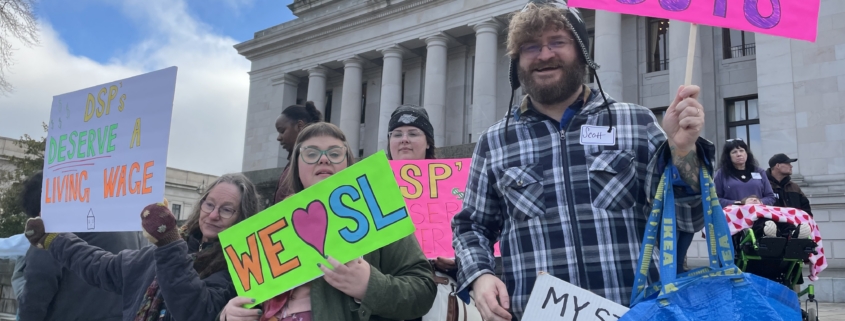
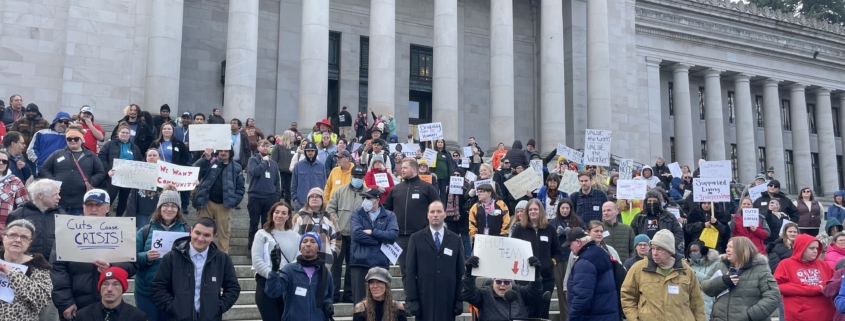
On a beautiful but cold Wednesday afternoon, hundreds of individuals with disabilities, families, providers, and advocates from across Washington State gathered on the Capitol steps to raise their voices in unity. Their message was clear and urgent: protect the right to community living and preserve the essential services people with disabilities need to live full, independent lives.

A Threat to Essential Services

With looming threats to disability services, advocates are sounding the alarm — disability services are essential and must be protected from cuts.

The Governor’s proposed budget includes a change that would lower eligibility for long-term care services beginning in 2028, including access to home and community-based waivers and personal care services. While presented as a cost-saving measure, this proposal would have devastating consequences for thousands of Washingtonians.

The Impact

We are only beginning to understand the full impact of this proposal. Early estimates suggest that between 2,000 and 2,500 people currently receiving Developmental Disabilities Community Services (DDCS) would lose all services.
In addition, another 2,000–2,500 individuals served by the Home and Community Living Administration (HCLA) could also lose vital supports — many of whom are people with intellectual and developmental disabilities (IDD) who opted to receive services through HCLA instead of DDCS.

Although the cuts are aimed at individuals with lower support needs, the real-world impact would be severe. Sometimes, people just need a small amount of support to thrive:

  • A job coach who helps them maintain stable employment
  • A home care worker who visits weekly to provide transportation to get to the store, meal prep, and help around the house
  • A few hours of respite that give families the chance to rest and recharge

When these supports disappear, lives unravel. People may lose their jobs, homes, and independence. Families face burnout. Individuals could end up homeless, hospitalized, institutionalized, or even incarcerated — all of which cost the state far more in the long term.

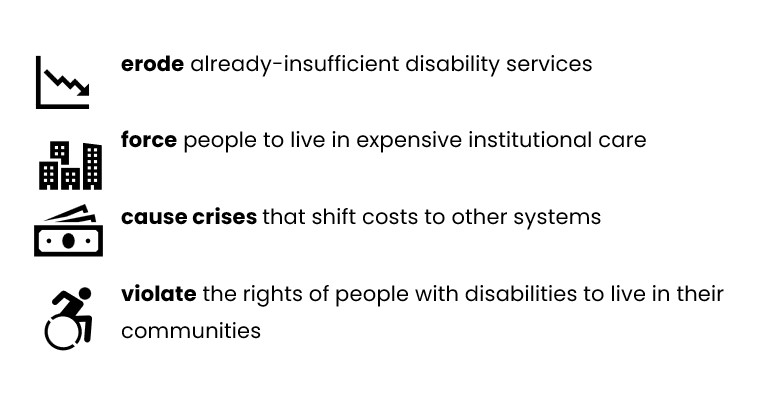
These proposed changes would:

What Comes Next

We are waiting for both the House and Senate to release their budget proposals to see whether they will adopt similar eligibility cuts. The next few weeks are critical.

What You Can Do

Your voice matters. You can help protect community living and essential supports for people with IDD.

Here’s how:

  • Reach out to your legislators, especially those serving on the House Appropriations Committee and Senate Ways & Means Committee.
    Tell them clearly:

“Do NOT make changes to long-term care eligibility. Protect community services and the right to independent living for people with disabilities.”

  •  Stay informed. Track the budget process and follow our budget side by side for comparisons of the House and Senate proposals to see how they will impact people with intellectual and developmental disabilities.

Community Services Save Lives and Save Money


Community-based supports prevent crises, maintain stability, and avoid higher state costs down the line.

Say NO to costly cuts to Medicaid long-term care eligibility.
Say YES to inclusion, independence, and dignity for all Washingtonians.