

DD Advocacy Blog: We rallied in Olympia!
On a beautiful but cold Wednesday afternoon, hundreds of individuals with disabilities, families, providers, and advocates from across Washington State gathered on the Capitol steps to raise their voices in unity. Their message was clear and urgent: protect the right to community living and preserve the essential services people with disabilities need to live full, independent lives.

A Threat to Essential Services
With looming threats to disability services, advocates are sounding the alarm — disability services are essential and must be protected from cuts.
The Governor’s proposed budget includes a change that would lower eligibility for long-term care services beginning in 2028, including access to home and community-based waivers and personal care services. While presented as a cost-saving measure, this proposal would have devastating consequences for thousands of Washingtonians.
The Impact
We are only beginning to understand the full impact of this proposal. Early estimates suggest that between 2,000 and 2,500 people currently receiving Developmental Disabilities Community Services (DDCS) would lose all services.
In addition, another 2,000–2,500 individuals served by the Home and Community Living Administration (HCLA) could also lose vital supports — many of whom are people with intellectual and developmental disabilities (IDD) who opted to receive services through HCLA instead of DDCS.
Although the cuts are aimed at individuals with lower support needs, the real-world impact would be severe. Sometimes, people just need a small amount of support to thrive:
- A job coach who helps them maintain stable employment
- A home care worker who visits weekly to provide transportation to get to the store, meal prep, and help around the house
- A few hours of respite that give families the chance to rest and recharge
When these supports disappear, lives unravel. People may lose their jobs, homes, and independence. Families face burnout. Individuals could end up homeless, hospitalized, institutionalized, or even incarcerated — all of which cost the state far more in the long term.
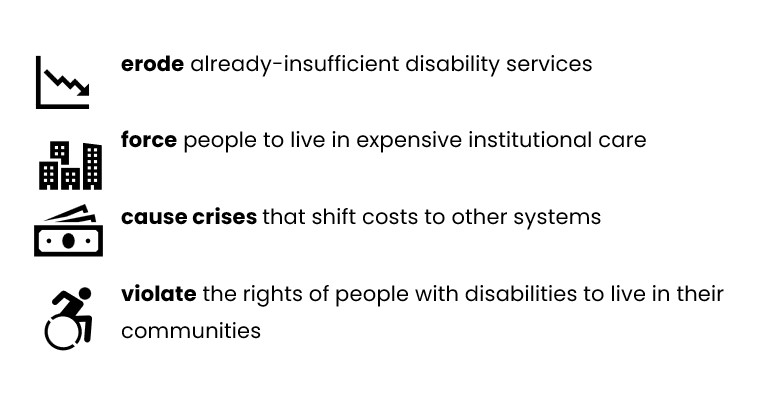
These proposed changes would:
What Comes Next
We are waiting for both the House and Senate to release their budget proposals to see whether they will adopt similar eligibility cuts. The next few weeks are critical.
What You Can Do
Your voice matters. You can help protect community living and essential supports for people with IDD.
Here’s how:
- Reach out to your legislators, especially those serving on the House Appropriations Committee and Senate Ways & Means Committee.
Tell them clearly:
“Do NOT make changes to long-term care eligibility. Protect community services and the right to independent living for people with disabilities.”
- Stay informed. Track the budget process and follow our budget side by side for comparisons of the House and Senate proposals to see how they will impact people with intellectual and developmental disabilities.
Community Services Save Lives and Save Money
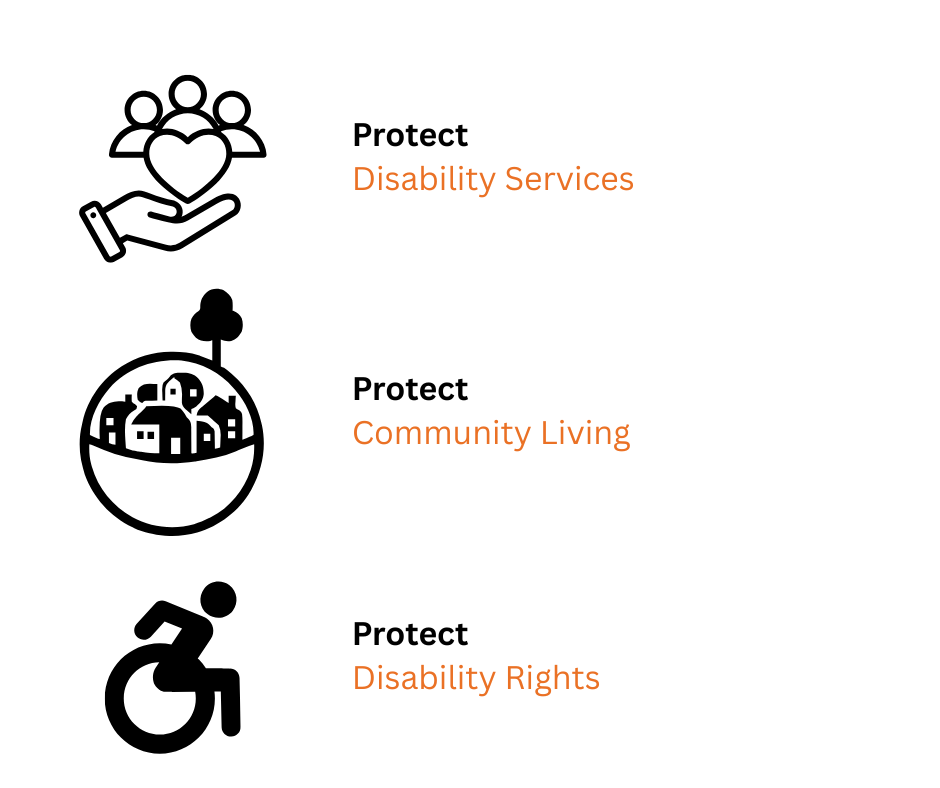
Community-based supports prevent crises, maintain stability, and avoid higher state costs down the line.